


Flat transport vehicles are widely used in engineering machinery transportation, equipment relocation, building materials transportation and other scenarios, and can load large cargo such as excavators, loaders, and engineering components. For engineering companies and individual transportation practitioners, the purchase cost of second-hand flatbed transport vehicles is lower and can be quickly put into operation. However, flatbed transport vehicles have a large load capacity and are often subjected to heavy object crushing for a long time. Second hand vehicles are prone to hidden dangers such as frame deformation, leaf spring aging, and brake attenuation. If the car selection is not careful and the operation is not standardized, it is highly likely to cause safety accidents such as cargo tilting and vehicle rollover. This article explains the key points of selecting and using second-hand flatbed transport vehicles from several aspects, including vehicle model selection, vehicle condition verification, on-site testing, operation standards, and daily maintenance.
1、 Determine the basic parameters of the vehicle model based on transportation needs
The first step in choosing a second-hand flatbed transport vehicle is to determine the vehicle specifications based on the daily weight and external dimensions of the transported goods. Firstly, clarify the rated load capacity, and do not simply pursue large flat plates. Long term overloading will accelerate vehicle damage. For short distance transportation of small construction machinery, lightweight flatbed transport vehicles can be selected; If transporting large and medium-sized excavators and heavy equipment frequently, it is necessary to use heavy-duty flatbed trucks.
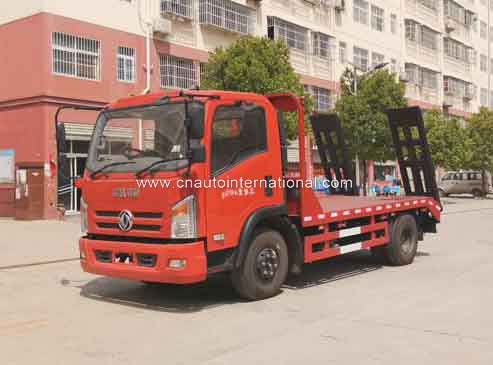
Next, check the size of the tablet surface and the structure of the ladder. Ladders are the core components of flatbed trucks, divided into fixed and folding types. Folding ladders are preferred for long-distance transportation to reduce driving wind resistance. At the same time, pay attention to the chassis form and wheelbase. If the wheelbase is too long, the turning performance of the vehicle will deteriorate, and it will be inconvenient to transport on narrow construction sites. In addition, it is necessary to confirm the vehicle emission standards and select them according to the requirements of the operating region to avoid obstacles in registration and annual inspections. By clarifying the usage scenarios in advance, we can narrow down the range of car choices and avoid buying vehicles that do not meet the specifications.
2、 On site verification of vehicle condition, with a focus on inspecting the core structure
The frame is the load-bearing framework of a flatbed transport vehicle and is of utmost importance for inspection. Observe whether there are any bending, twisting, or welding repair marks on the main and auxiliary beams of the frame. If there is secondary welding on the frame, it indicates that the vehicle has experienced overload or major collision, and the structural strength has been damaged. It is not recommended to purchase. Check the surface of the flat panel for any significant deformation or cracking of the steel plate, as well as the wear and tear of the anti slip patterns on the panel. Severe dents on the panel can affect the stability of goods placement.
The steering and braking systems are directly related to driving safety. Before the test drive, check the brake pads, brake drums, and air reservoirs to see if the air pipes are aging and leaking. Check the leaf spring and shock absorber, and observe whether the steel plate spring is broken or loose. Abnormal clearance between spring plates indicates long-term heavy load fatigue. Tires need to be checked for tread wear and bulges, while also paying attention to whether the wheel rim is deformed. Check for oil leaks and abnormal noises in the engine and gearbox, observe the color of the exhaust after starting, and feel for gear jumps or lagging when shifting gears. Also, check the hydraulic components. For models with hydraulic ladders, test whether the hydraulic lifting is smooth, whether there is oil leakage or jamming.
3、 Verify the procedural documents and complete the on-site test drive inspection
The verification of procedures cannot be ignored. Carefully check the driving license and registration certificate, confirm that the vehicle frame number, engine number, and identification documents are consistent, and check the vehicle's past transfer records, insurance, and annual inspection status. Pay attention to whether the vehicle has any mortgage or seizure records to avoid transaction disputes.
After confirming that the procedures are correct, conduct on-site testing. Drive at low speed in an unloaded state and test whether the steering is sensitive and whether the braking deviates. Operate the ladder to repeatedly lift and lower, observe whether the hydraulic system operates smoothly and whether there is any abnormal noise. If conditions permit, a light load test run can be conducted to check for any abnormalities in the frame and braking under heavy load conditions. Pay attention to the dashboard malfunction light during the test drive process. If there is an abnormal alarm, it is necessary to investigate the root cause of the malfunction.
4、 Standardize loading operations and avoid transportation safety risks
After the second-hand flatbed transport vehicle is put into use, the loading process is the key to safety control. Clean the surface debris of the flat plate before loading, check the fixing straps and anti slip pads. When loading and unloading the tablet on the device, keep the vehicle level and the ground solid to prevent the tablet truck from slipping. When the construction machinery is mounted on the flat plate, the speed should be slow and aligned with the center position to prevent uneven loading. The center of gravity of the goods should be placed in the middle of the flat plate as much as possible, and overloading or uneven loading is prohibited.
After the goods are in place, use high-strength straps and wedges to fix them, and ensure that the wheels have anti slip limits. After confirming that all fixed devices are securely fastened, start the vehicle. Control the speed during driving, slow down in advance when turning or going downhill, and avoid sudden braking or sudden directional changes. Long distance transportation requires regular parking to check if the straps are loose and if the goods have shifted.
5、 Carry out daily maintenance to extend the service life of vehicles
Second hand vehicles themselves have certain wear and tear on their components, and a regular inspection mechanism needs to be established. Perform basic inspections before and after each trip, checking the condition of the board, ladder, hydraulic pipelines, brakes, and tires. Regularly tighten the frame and leaf spring connection bolts, and replace aged hydraulic oil pipes and seals in a timely manner.
Vehicles should be stored on a flat surface as much as possible. If parked for a long time, the ladder should be retracted to reduce the continuous stress on the hydraulic system. Regularly replace engine oil and gear oil, and maintain chassis components according to the maintenance cycle. Once problems such as cracking of the frame, decreased braking performance, and hydraulic leakage are found, the operation should be immediately stopped. Only after passing the maintenance and inspection can it continue to be used.
Second hand flatbed transport vehicles have obvious cost-effectiveness advantages, but their load-bearing structures are complex and there are many hidden faults. When choosing a car, consider parameter matching, structural safety, and procedural integrity; Strictly adhere to loading standards during use and insist on daily inspection and maintenance. Only scientific selection and standardized operation can ensure the safety of transportation operations and reduce operational losses caused by vehicle failures.
