


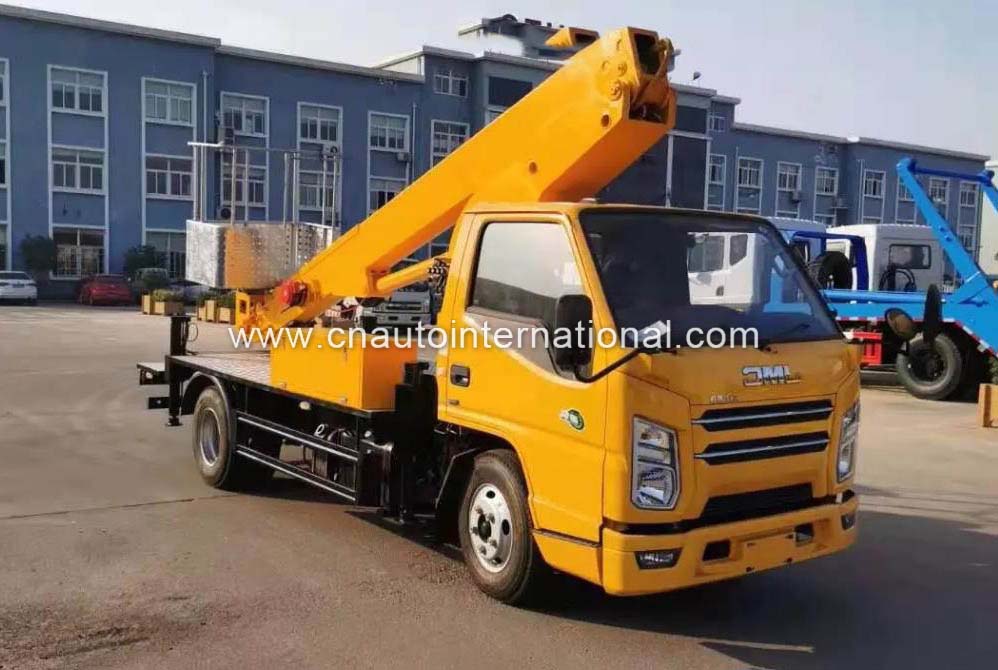
As the core equipment for high-altitude operation, the aerial vehicle is widely used in municipal maintenance, plant construction, venue construction, garden maintenance, building decoration and other scenes. Compared with the brand new equipment, the second-hand climbing vehicle has higher cost performance and lower investment cost, making it the preferred equipment for small and medium-sized construction teams and property maintenance enterprises. However, the elevating vehicle belongs to special equipment with precise structure and strict safety standards, and the second-hand equipment has hidden problems such as component wear, hydraulic aging and electric control loss. Due to careless vehicle selection and non-standard operation, many users are very likely to suffer from platform jamming, lifting failure, tilt out of control and other hidden dangers. In this paper, the selection and use skills of the second hand climbing vehicle are explained in detail from five dimensions: model selection, vehicle condition verification, compliance inspection, standard operation and daily maintenance.
1、 Select models as required and adapt to the operation scene
The first principle for selecting second-hand climbing vehicles is to fit the actual operation scene, so as to avoid idle equipment or insufficient performance caused by blind selection and purchase. The main stream in the market is divided into three types: straight arm type, crank arm type and scissor fork type, with obvious differences in applicable scenarios. Scissor fork type climbing vehicle is simple in structure, large in bearing capacity and stable in vertical lifting. It is suitable for the fixed height operation of indoor plant, shopping mall and flat ground of community. It is a common model for daily maintenance and simple construction.
With higher flexibility, the crank arm aerial vehicle can operate across obstacles, and is suitable for outdoor complex sites, building external walls, garden tree pruning and other scenes. With high operation height and large operation radius, the straight-arm aerial vehicle is applicable to high standard construction scenes such as large infrastructure construction, venue erection and high-altitude equipment installation. During purchase, precise model selection shall be carried out in combination with operation height, site ground conditions, obstacles, number of operation carriers, and electric self-propelled and diesel powered models shall be distinguished. Indoor silent electric models are preferred, while outdoor diesel powered models can be selected.
2、 Carefully check the vehicle condition and troubleshoot hidden faults
The inspection of the condition of the used aerial vehicle is the core of vehicle selection, focusing on the four key parts of chassis structure, hydraulic system, electronic control system and operation boom. The appearance and color are only for secondary reference. Firstly, check the chassis and traveling mechanism to see whether the frame is deformed, cracked, welded and repaired, whether the tire wear is uniform, and whether the hub is intact. Test whether the traveling and steering are stable, and whether there is deviation and jamming.
The hydraulic system is the most vulnerable core component of the aerial vehicle. It is necessary to focus on checking whether there is oil leakage and oil leakage at the hydraulic pipeline and the oil cylinder seal, and test whether the platform lifting, boom extension and rotation are smooth, whether there is abnormal sound, shake, pressure release and sliding, etc. Repeat no-load and load tests to eliminate hidden faults such as aging and internal leakage of hydraulic valve group. Secondly, check the electric control system, test whether the operating handle, key and display screen are sensitive, whether various fault indicators and safety warning devices are normal, and eliminate the problems of electric control failure and signal disorder. Finally, check the guardrail, base plate and hinge pin of the platform, and confirm that there is no deformation, looseness or serious wear.
3、 Check compliance qualification and eliminate operation risks
High-rise vehicles belong to special equipment. Compliance is the basis for normal operation and annual inspection and customs clearance. The qualification of procedures must be strictly checked for the purchase of second-hand equipment. Firstly, check the vehicle registration certificate, driving license, ex-factory certificate of equipment and special equipment inspection report to confirm that the equipment model and parameters are consistent with the filing information, and there is no illegal operation such as unauthorized modification of arm length, hydraulic system and rated height.
At the same time, check the annual inspection records of the equipment to confirm that the equipment is within the validity period of the annual inspection, and there is no state of de-approval, locking, sealing, etc. Focus on checking the integrity of safety configuration, including emergency descending button, emergency stop switch, tilt protection, overload protection, anti-falling device, audible and visual alarm, etc. All safety devices must be intact and effective, missing or invalid equipment must not be purchased, so as to avoid violations of regulations and safety accidents in later operation.
4、 Standardize the operation process for safe and efficient operation
Parts of used aerial vehicles are naturally aging with low fault tolerance rate, so standard operation procedures must be strictly observed to prevent illegal operation. Before operation, site survey shall be carried out to confirm that the ground is flat and solid. The soft ground shall be reinforced with steel plates to avoid dangerous areas such as foundation pit, slope and cavity. Obstacles and personnel within the operation radius shall be cleared.
No-load test run shall be carried out after startup to test the lifting, slewing, walking and braking functions, and the operation with people and load shall be carried out after confirming no abnormality. The rated load and height shall be strictly observed during operation. Overload operation and over-range extension of boom are strictly prohibited. Platform operators must fasten safety belts and fix them firmly. Skipping, leaning on guardrails and shaking equipment at will are prohibited. Operate the handle stably during operation to avoid sharp rise, drop and rotation and reduce the impact of hydraulic system and equipment wear.
In case of severe weather such as strong wind and rainstorm, stop working at heights immediately, and recover the equipment to the original position and park it stably. Upon the completion of the operation, the platform shall be placed on the ground and the boom shall be retracted, the power supply shall be turned off, the debris on the equipment surface shall be cleaned, and the equipment shall be put in order.
5、 Daily fine maintenance to extend the service life of equipment
Perfect daily maintenance is the key to the long-term use of used aerial vehicles, which can effectively delay the aging of parts and reduce the probability of failure. Before and after daily operation, check the vehicle appearance, hydraulic pipeline, tire and guardrail structure, eliminate leakage, looseness and damage, and timely clean equipment dust and debris. Regularly add lubricating grease to the hinge pin shaft, slewing bearing and traveling mechanism to avoid getting stuck due to dry grinding.
Replace the hydraulic oil and filter element regularly according to the service hours of the equipment, check the hydraulic oil quality, and prevent the hydraulic pump and valve group from being worn by impurities. Calibrate the safety protection device regularly, test the tilting induction, overload alarm and emergency brake functions, and ensure that the safety system is sensitive and reliable. When the equipment is parked for a long time, park the equipment on a flat and dry site, retract the boom and platform, cut off the power supply, provide dust and rust prevention protection, and conduct regular no-load test run to prevent corrosion and stagnation of components.
Summary
The core of selecting and using second hand climbing vehicles is to select suitable models for the scene, carefully check and eliminate hidden dangers, carry out compliance procedures and guarantee operation, standardize operation and prevent risks, and carefully maintain and extend the service life. Discarding the misunderstanding of blindly selecting and purchasing at low price, focusing on the core working condition and safety performance of equipment, and strictly complying with the operation specification of special equipment can not only maximize the cost performance of second-hand climbing vehicles, reduce the construction cost, but also ensure the safety and stability of high-altitude operation, and effectively extend the service period of equipment.
