


Concrete mixer truck is the core specialized vehicle for infrastructure projects, construction sites, and commercial mixing station operations. Compared to new cars, second-hand mixer trucks with high-quality condition have higher cost-effectiveness and faster payback period, making them the preferred choice for small and medium-sized construction teams and rental fleets. But the mixer truck belongs to high-strength heavy-duty engineering vehicles, which are constantly bumpy at full load and operate continuously. The market is filled with problem vehicles such as rollover accident vehicles, hydraulic repair vehicles, violent use of vehicles on construction sites, and meter adjustment vehicles. Many buyers only focus on appearance and quantity, ignoring the wear and tear of the chassis, hydraulic system, and tank body. After purchasing a car, they frequently stop work for maintenance, resulting in losses due to missed work. This article shares professional methods for purchasing second-hand mixer trucks from five dimensions: working condition matching, core component testing, procedure verification, pit avoidance points, and cost accounting.
1、 Match the volume and chassis configuration according to the construction scenario
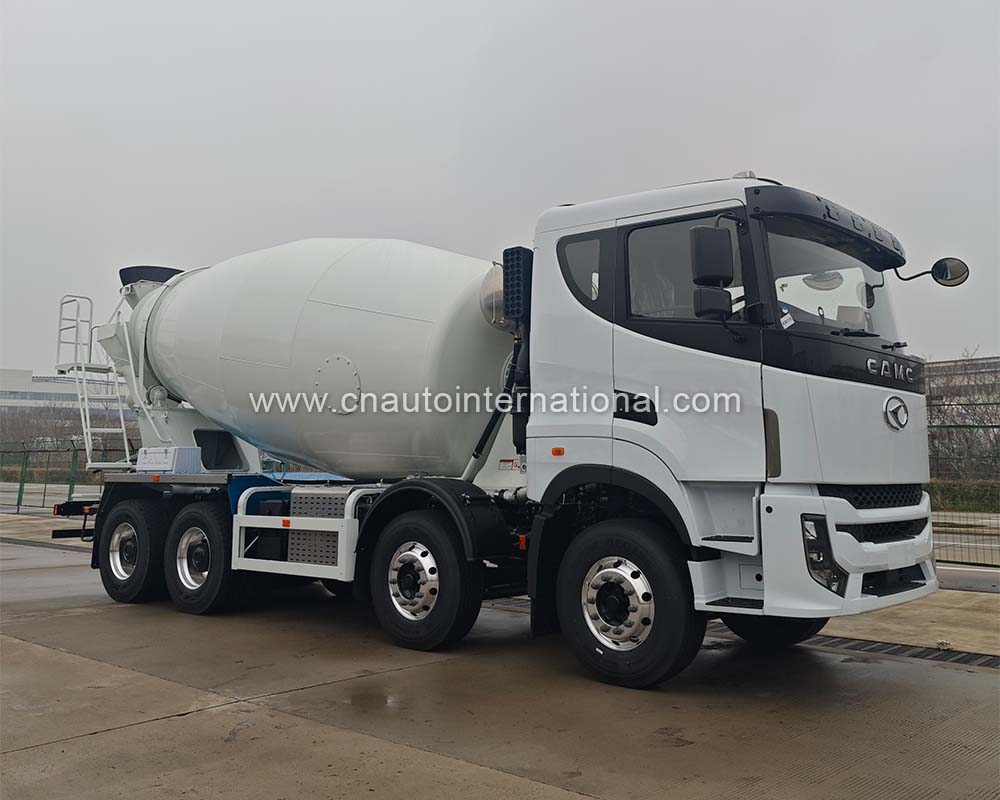
The first step in choosing a second-hand mixer truck is to prioritize the construction conditions and lock in the vehicle model to avoid operational inefficiencies caused by mismatched configurations. For narrow roads in urban areas and villages, as well as small-scale infrastructure projects with limited roads and low volume demand, 8-10 square meter lightweight mixer trucks are preferred. They have flexible body, high pass rate, and lower fuel consumption, and are suitable for short distance transportation.
Large scale infrastructure, highways and bridges, and high-frequency transportation scenarios at commercial mixing stations result in a large daily discharge volume. It is recommended to use 12-14 cubic meters of large capacity four, four, and eight vehicle models, which have sufficient horsepower and strong load-bearing capacity, and are suitable for high-intensity continuous operations. At the same time, distinguishing emission standards, prioritizing the construction of National V and National VI regulated vehicles in urban areas to avoid traffic restrictions and obstacles to annual inspections; Remote construction sites and non restricted areas can choose cost-effective and compliant old car models to control the purchase budget.
2、 Core component testing to prevent severe wear and tear during major repairs
The losses of the mixer truck are concentrated in the four core components of the engine, gearbox, hydraulic system, and tank reducer, which are also of great importance in inspection and directly determine the remaining service life of the vehicle.
The engine should be carefully checked for starting status. There should be no black or blue smoke during cold start, and the idle speed should be stable without severe shaking. The engine cylinder block and pipelines should be inspected for large oil leaks or signs of major repairs and disassembly. There should be no serious gas leakage in the lower exhaust to avoid long-term overloading and violent use. During the road test, the power output was stable, and there was no power weakness or abnormal noise jamming when climbing hills.
The hydraulic system and reducer are the most expensive and vulnerable parts of the mixer truck, and also the biggest purchasing problem. Carefully inspect the hydraulic pump, oil pipes, and joints for any signs of oil leakage, and ensure that the tank rotates smoothly and uniformly without any jamming or abnormal noise. The gearbox has no oil leakage or blockage, and once a malfunction occurs, the maintenance cost is extremely high. Simultaneously test the forward and reverse rotation, as well as the start stop function of the tank, to confirm that the speed regulation is sensitive and the operation is stable.
3、 Inspect the tank and chassis, and investigate structural damage caused by accidents
The tank body and chassis are the load-bearing foundation, with a focus on identifying accident vehicles and refurbished repair vehicles. Observing the appearance of the tank body, there is no deformation, collision or depression, and the welds are uniform without any traces of secondary welding repair. The mixing blades inside the tank are worn evenly, without extensive thinning or repair reinforcement. Severe blade wear indicates long-term full load high-frequency operation with short remaining life.
The chassis beam, suspension, and rear axle are the safety core. Carefully inspect the beam for any signs of fracture, deformation, cutting, or secondary welding, and ensure that the three-layer beam structure is intact and undamaged. Check the status of the ladder, bracket, and accessories. If there is deformation and replacement, there is a high probability that the vehicle may have a rollover accident. At the same time, check the wear status of the tires and brake system, and ensure that the wear is uniform and the braking is sensitive, which is considered a high-quality vehicle condition.
4、 Verify the complete set of procedures to avoid property rights and compliance risks
The complete procedures for the transaction of engineering vehicles are the foundation for normal transfer, annual review, and on road operation. Before purchasing a car, it is necessary to verify the registration certificate, driving license, and vehicle consistency certificate to confirm that the chassis number, engine number, and identification information are completely consistent.
Focus on checking the status of vehicles, confirming that there are no court seizures, bank mortgages, or theft records, and eliminating issues such as inability to transfer ownership and property disputes. Simultaneously verify the vehicle annual inspection and insurance validity period, and confirm that there are no large number of unresolved violations. Sign a formal car purchase contract during the transaction, clearly stating terms such as no major accidents, no water bubbles, no fire, no major hydraulic repairs, etc., retain after-sales support, and refuse verbal promises.
5、 Identify the source of vehicle condition and select high-quality vehicle sources
Different usage scenarios result in significant differences in vehicle wear and tear, and choosing the right vehicle source is more important than bargaining. Priority should be given to retired vehicles from commercial mixed use stations, which are regularly maintained, serviced on time, have stable working conditions, uniform wear and tear, and transparent vehicle condition.
Resolutely avoid mining sites, remote violent construction, and miscellaneous vehicles that have been repeatedly sold. These types of vehicles operate under heavy loads, bumps, and idle for a long time, with significant hidden wear and tear on core components. Although they appear to be inexpensive, they often require frequent maintenance and serious work delays in the later stages, resulting in higher overall operating costs. At the same time, do not trust the mileage displayed on the odometer, and make a comprehensive judgment based on chassis wear, hydraulic status, and interior aging to avoid tampering with the odometer.
Summary
The core logic for purchasing a second-hand concrete mixer truck is to determine the volume based on the working conditions, check the hydraulic system for the core, check the original chassis, check for complete procedures, and check the working conditions for the vehicle source. Choose lightweight and small volume vehicles for small-scale short distance construction, and large volume heavy-duty vehicles for large-scale high-frequency transportation; Focus on inspecting the three major vulnerable parts of hydraulic, reducer, and engine to prevent accidents, major repairs, and violent use of vehicles. Selecting high-quality retired vehicles from legitimate commercial mixed use stations, relying on legitimate platforms for transactions, ensuring transparency in vehicle conditions and compliance with procedures, and helping engineering fleets operate at low cost, high efficiency, and stability.
