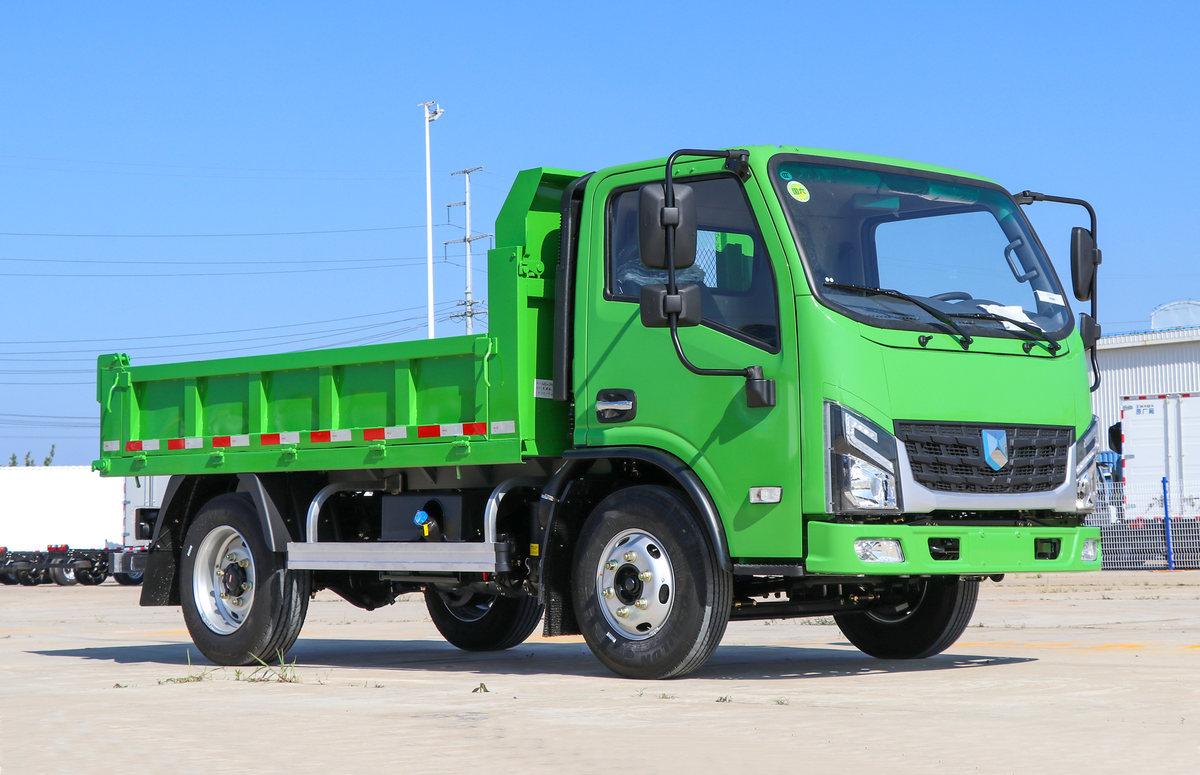
In recent years, China's second-hand commercial vehicles are rapidly becoming the core procurement choice of the global fleet. In 2024, China's second-hand commercial vehicle exports will exceed 400000 vehicles, with a year-on-year growth of 49.4%. In 2025, it is expected to reach 600000 vehicles, covering more than 160 countries and regions in the world. Countries along the "the Belt and Road" absorb more than 60% of their export shares, and three major markets in Africa, Central Asia and Southeast Asia account for more than 80%. Behind this trend is the core advantage of Chinese second-hand commercial vehicles in four dimensions: ultimate cost-effectiveness, global adaptability, standardized quality assurance, and efficient circulation system, perfectly matching the operational needs of global fleet cost reduction, efficiency improvement, and rapid expansion.
From a cost perspective, the price advantage of second-hand commercial vehicles in China is irreplaceable: a brand new European heavy-duty truck can be purchased overseas for over 800000 yuan, while a high-quality second-hand car of the same model from China that is 3-6 years old only costs 150000 to 250000 yuan, which is only 30% -40% of the price of a new car, directly saving more than 60% of funds; The depreciation rate of new cars in the first year is as high as 25% -35%, while used commercial vehicles in China have already exceeded their depreciation period, with an annual depreciation rate of only 8% -12%, making asset preservation more stable. At the same time, China's second-hand commercial vehicle finance and cross-border payment system is mature, supporting 10% -30% low down payment, 2-3 years flexible installment, with approval taking up to 2 hours, and monthly supply reduced by 40% -60% compared to overseas new cars, allowing global small and medium-sized fleets to expand their transportation capacity without heavy financial pressure.
In terms of scene adaptation and global circulation, the flexibility of Chinese second-hand commercial vehicles far exceeds that of European and American brands: the number of domestic commercial vehicles has exceeded 40 million, and the second-hand market covers all categories such as tractor, cargo truck, dump truck, refrigerated truck, etc. The proportion of high-quality vehicle sources in 3-6 years exceeds 70%, which can accurately match different global transportation scenarios such as long-distance trunk lines, urban distribution, engineering, mining, etc. In response to overseas market demand, Chinese car manufacturers can provide customized services such as left-hand drive to right-hand drive, climate adaptation modifications (such as strengthening high-temperature air conditioning in Africa and preheating systems in Central Asia), and localized regulatory adaptation, perfectly matching the road conditions and usage habits of different countries. Relying on cross-border logistics networks such as China Europe Express, China Laos Railway, and new land and sea channels, the export cycle of China's second-hand commercial vehicles is 40% shorter than that of traditional sea transportation, and the cost of single vehicle transportation is 30% lower. The cross-border delivery is completed within three days after watching the car on the same day, so as to quickly respond to the global fleet peak season replenishment capacity and emergency allocation needs.
Nowadays, China's second-hand commercial vehicles have established a globally leading standardized testing+professional maintenance+after-sales quality assurance system, completely breaking the industry pain point of "unknown vehicle condition and no after-sales service": leading enterprises have implemented 200+in-depth inspections, covering core components such as engines, transmissions, chassis, etc., issuing globally traceable digital inspection reports, promising "no major accidents, no water immersion, no fire", and unconditionally returning vehicles that do not meet the requirements. Relying on remanufacturing technology, high-quality vehicles have been professionally refurbished and their performance has been restored to over 90% of new cars, with a 40% reduction in failure rates. Some models have been in overseas operation for 5 years and their condition is still better than local new cars. On the after-sales side, Chinese car manufacturers integrate over 500 global repair service stations, providing cross regional joint maintenance with a 30 minute response time and a 24-hour resolution rate of over 92%. Some brands offer a 30-90 day warranty for core components, ensuring worry free use of vehicles by global fleets.
As a professional platform focused on the global second-hand commercial vehicle field, CAMC Used Cars focuses on the full scenario needs of global fleets, creating a one-stop solution for strict selection of vehicle sources, precise testing, customized modification, cross-border finance, and global after-sales: strict selection of high-quality vehicle sources with 3-6 years of national fifth grade or above, no major accidents, covering mainstream brands such as Hualing, Jiefang, Shaanxi Automobile, Dongfeng, etc; Implement 268 deep inspections, issue globally recognized authoritative reports, and promise "full refund for non compliant vehicle conditions"; Provide customized modification services such as left-hand drive to right-hand drive, climate adaptation, and regulatory compliance;
From the monopoly of European and American brands to the dominance of Chinese second-hand commercial vehicles, the global fleet procurement concept has returned to rationality. Chinese second-hand commercial vehicles, with their core advantages of low cost, strong adaptability, comprehensive protection, and fast turnover, have become the optimal solution for global logistics, engineering, mining, urban distribution and other industries to reduce costs, increase efficiency, and achieve high-quality development. With the standardization, digitization, and globalization of the Chinese used commercial vehicle market, the condition of vehicles is becoming more transparent, services are more comprehensive, and circulation is more efficient. Chinese used commercial vehicles will continue to empower global fleet operations, and CAMC used cars will continue to provide more reliable and efficient global procurement solutions, helping global fleets steadily move forward in fierce market competition.